Disbudding, as the term would indicate, is the removal of a goat’s horn buds, or the spots where horns would eventually grow. The horn buds can usually be felt during the first week of life, which is when most vets recommend disbudding take place. This is because horns are attached to a goat’s skull, and the less horn tissue there is, the easier it is to remove.
If a goat is born without any horn tissue, it is said to be polled and can pass this gene on to its offspring. Many dairy goat breeders breed for this trait in particular.
So how does one disbud a goat? Disbudding is done with a hot iron that burns through the skin and sears off the beginnings of the goat’s horns. The goat’s head can be shaved so that fur does not get in the way. Sedation is simple and usually presents no complications, and most farmers are able to disbud an entire season’s worth of goat kids without many issues. The wounds just need to stay clean, dry and clear of infection. Antiseptic spray, Blu-Kot and blood stop powder can be applied to aid in the healing process if needed.
If a wound does not seem to be healing well or breaks back open, your goat may require an antibiotic such as LA-200, which is injected subcutaneously, or into fatty tissue beneath the goat’s skin. I give injections in the shoulder right below the neck and have never had a problem doing so. I brought in a goat two years ago with a gaping wound on her head. It looked terrible, but the bone underneath was fine, and using the above methods, I was able to heal her up in about two weeks.
It is important that disbudding be done properly so the bone is not burned too deeply, or on the converse, so that horn tissue is not left behind that might cause the horns to grow back. Fragile or misshapen horns that form from failed disbudding are called scurs. Sometimes scurs fall off, but they can also be broken off, which may be bloody. In my experience, it looks much worse than it actually is, and the scur will often stop bleeding on its own.
Scurs can also curl around and grow back into the animal’s skull. If this starts to happen, the scurs obviously need to be removed, and you can do so with a PVC saw, which is simply a piece of wire attached to a handle. We had to do this with our Nigerian Dwarf buck, Lefty, who screamed like he was being killed slowly. I am almost certain you could hear him from the road. The scur still grew back one more time before falling off forever.
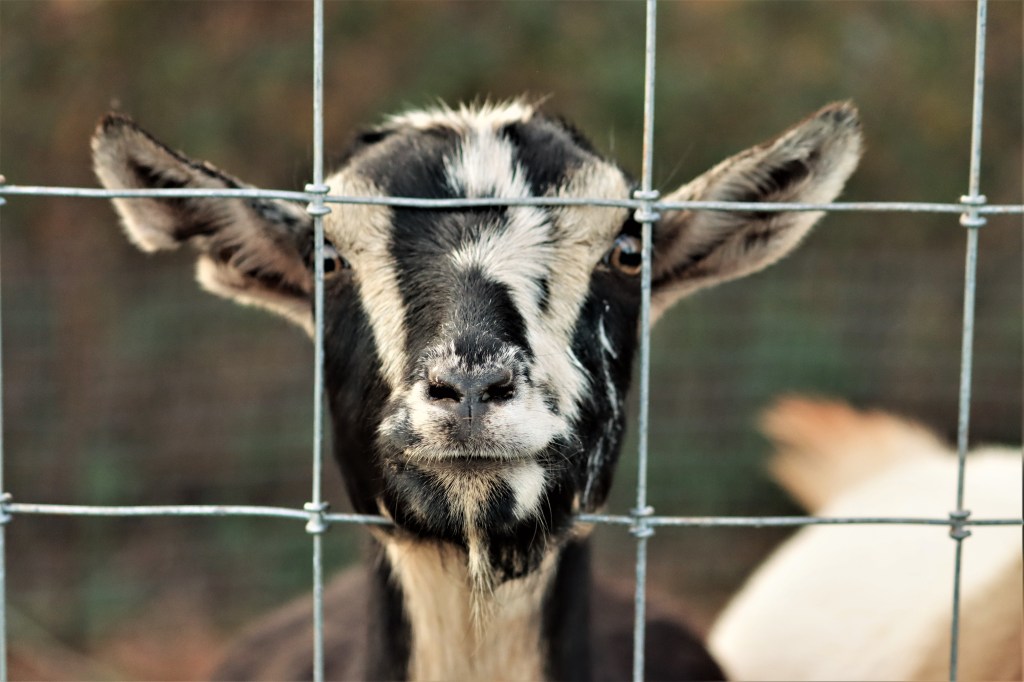
So why would you want a goat with no horns? Well, goats tend to get their horns stuck in fences and hay feeders, depending on the sense of the animal and the shape of its horns. Fully formed horns, again, are part of the bone structure of the goat’s head. If a goat breaks a horn off, it can cause trauma to the goat’s skull and brain, and not to mention, make an ugly, bloody mess.
Goats may also injure each other or other animals with their horns. I have heard of goats putting donkeys’ eyes out, and we personally have had goats with single horns who did some damage to their herd mates. The best way to handle fighting goats is to make it an even fight. In other words, don’t put a small polled goat in with a big, aggressive horned goat. If the fight is unfair, they might not actually hurt each other, but the smaller goat is likely to be bullied out of their share of food.
I let all of my goats keep their horns because they are their only line of defense. They also help goats regulate their body heat. My husband and I use our goats’ horns as “handlebars” when we are administering medication and trimming hooves. Mind you, we do not show our goats. Whether or not a show goat should have horns depends on the breed in question.
Possibly the biggest positive of having horned goats is never having to fool with the disbudding of babies. Regardless of whether the practice is humane or not, at our farm, simplest is best! With animal husbandry, you can ask a hundred people how they manage and get a hundred different answers. What matters is that you know your options so as to make an informed decision about what is best for you, your animals and your family.




 Red Branch Mama
Leave a comment